
Spa Repair in Milpitas, CA
Heaters, pumps, jets, leaks and control panels fixed on portable hot tubs and in-ground spas.

Schedule Service!
Hot Tub Repair for Standalone Tubs and Pool Spas
Our spa repair in Milpitas covers everything that keeps a hot tub hot, bubbling and dry underneath: the heater, pumps, jets, blower, plumbing and control system. We fix portable hot tubs with their own equipment and in-ground spas that share a pump and heater with the pool.
What Our Spa Repair Covers
- Spa heater repair
- Spa pump repair
- Jet repair
- Spa leak detection
- Control panel troubleshooting
- Blower and circulation problems
Repair Problem or Water Problem?
Foam, cloudy water and a scum ring are water problems, and our spa cleaning takes care of those. A cold tub, dead jets, a tripping breaker or a puddle under the cabinet is a repair.
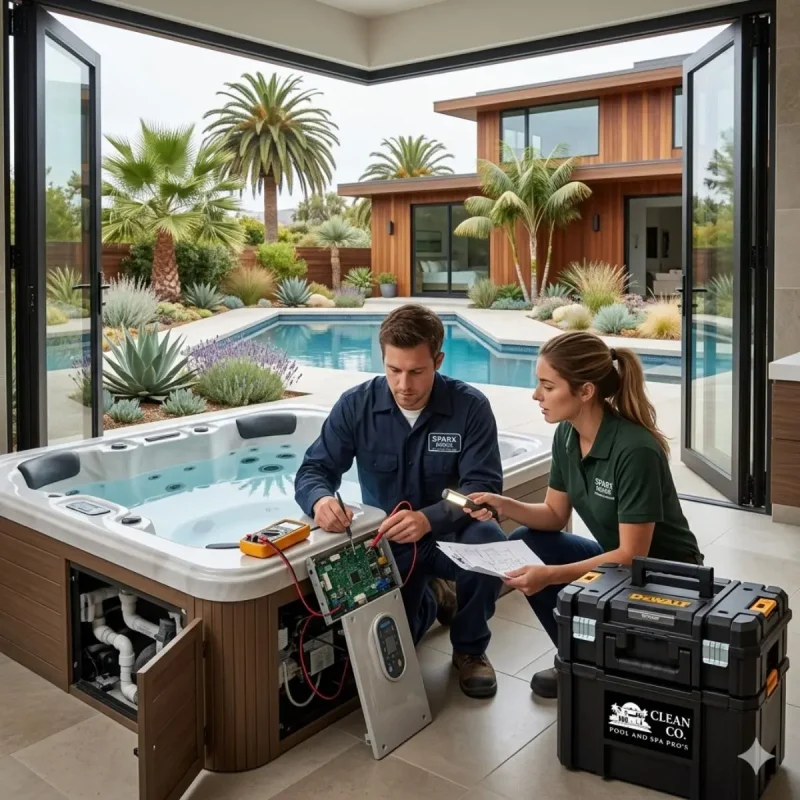
Hot Tub Cold, Quiet or Leaking? Get a Free Spa Repair Quote
We Are Experts With:




Why Is My Hot Tub Not Heating?
When a hot tub is not heating, the heater often isn’t the part that failed. Spa heaters won’t turn on unless enough water is flowing past them, so a clogged filter or a pump problem shuts off the heat too. Most control panels show a flow error when that happens.
Other common causes include a tripped high-limit switch and a failed temperature sensor. A burned-out heater element or a tripped GFCI does it too. On a spa built into a pool, the valves may simply be set to pool instead of spa, or the pool heater itself may need attention. Our pool heater repair page covers gas heaters and heat pumps.
Start with the filter. Pull it, rinse it and see if the heat comes back. If it doesn’t, write down any code on the panel before you call. And keep the cover on: a spa loses most of its heat through the surface, and an uncovered tub on a cold Milpitas night can outrun a small heater.
Hot Tub Jets Not Working
Weak or dead jets usually come down to one of a few things. The jet face may be turned closed, since many jets open and close by rotating. The filter may be clogged. A diverter valve may be sending water to a different set of jets. Or the jet pump itself may be failing.
If the pump hums but the jets stay flat, the pump may be air-locked, especially right after a refill. If the pump runs and moves water but the bubbles are gone, the air blower or the air controls on the top of the spa are the next place to look.
A single jet that won’t work while the rest do usually points to a clog or a broken jet insert.
Hot Tub Air Lock After Refilling
An air lock happens when a pocket of air gets trapped in the pump after the spa is drained and refilled. The pump hums or whines, but no water moves. Run it that way for long and the seal can burn up.
To clear it, turn the power off and slowly loosen the union nut on the discharge side of the pump until water starts to seep out, then tighten it again. Some pumps have a small bleed screw for the same purpose. Filling the spa through the filter housing, instead of dropping a hose over the side, prevents most air locks in the first place.
Hot Tub Leaking: Finding the Source
Some water loss is normal. Hot water evaporates quickly, especially with the cover off. A drop of more than an inch or so a week, a wet cabinet or water pooling under the tub points to a leak.
The usual suspects are pump shaft seals and the unions on either side of the pump and heater. The heater’s own fittings and the jet bodies set into the shell are next. Cracked plumbing and loose glue joints under the tub are less common but harder to reach.
Finding the exact spot usually means pulling the cabinet panels and checking each joint with the equipment running. That’s the leak detection part of a spa repair, and it’s worth doing before any water or foam insulation gets ruined.
GFCI Keeps Tripping
A GFCI protects you from shock. It measures the current going out and coming back on a circuit, and it cuts the power when about 5 milliamps goes missing somewhere, which usually means through water. When a hot tub GFCI keeps tripping, something in the spa is leaking current.
The most common causes are a heater element that’s starting to fail, moisture inside a pump motor, a wet or corroded wire connection and, sometimes, the GFCI breaker itself. Never bypass it or swap in a regular breaker. The Electrical Safety Foundation ranks GFCI protection among the most important safeguards around pools and spas. Very old tubs may not have GFCI protection at all, since the electrical code only started requiring it for spas in 1981.
Spa Pump and Blower Problems
Most hot tubs have a two-speed jet pump, and many also have a small circulation pump that runs quietly for heating and filtering. Both fail the same ways pool pumps do: leaking shaft seals, worn bearings that screech, capacitors that stop a motor from starting and impellers clogged with debris.
The blower is a separate air pump that feeds bubbles into the spa. It should be protected so water can never back up into it, usually with a check valve or a raised loop in the air line. A blower that gets water inside tends to trip the GFCI or fail outright.
Control Panels and Error Codes
Spa control systems watch water flow, water temperature and the heater. When something falls outside the normal range, they shut things down and show a code. Flow errors, overheat warnings and sensor faults are the most common.
The code tells you which system tripped, not always which part failed. A flow error can be a dirty filter, a closed valve or a bad pressure switch. An overheat warning can be a stuck heater relay or a pump that runs too long in hot weather. Write down the exact code and your spa’s brand before you call. It speeds up the repair.
Spas Built Into a Pool
An in-ground spa that shares equipment with the pool works differently from a portable hot tub. One pump, one filter and one heater serve both, and valves decide which one gets the water. Many systems use motorized valves tied to an automation panel.
So a spa that won’t heat or fill may really have a valve that didn’t turn, an automation setting or a pool heater problem. Our pool pump repair and heater pages cover the shared equipment.
How Water Chemistry Damages Spa Equipment
Hot water is hard on equipment. Calcium drops out of solution faster as water heats up, so scale builds up on heater elements and inside heat exchangers. Scaled elements run hotter and burn out sooner.
Low pH causes the opposite problem. Corrosive water eats at heater elements and metal parts, and water full of dissolved solids makes corrosion worse. Keeping the spa balanced and draining it on schedule protects the heater better than any repair.
When a Hot Tub Isn’t Worth Fixing
Most spa repairs are worth doing, since the heater, pumps and controls are all replaceable. The shell and frame are a different story. A cracked or blistered shell, a rotted wooden frame or foam insulation soaked through with water usually means the tub itself is near the end.
Several failures at once are another sign. If the heater, a pump and the control system all need replacing in the same year, the total can approach the cost of a new tub. We’ll give you the repair price so you can compare.
Spa Repair Cost in Milpitas
Hot tub repair cost depends on the part. A sensor, pressure switch or jet insert is a small repair. A heater element or circulation pump costs more, and a full control system, often called a spa pack, is the biggest equipment repair. We give you a free quote before any work starts, and we work on standalone tubs and pool spas from the major brands.
Before the Repair Visit
- Write down any code on the control panel and when it appears.
- Note what changed: a refill, a storm, a power outage or new chemicals.
- Keep a path clear to the equipment or the cabinet panels.
- Leave the breaker off if the GFCI keeps tripping or you smell burning.
A few minutes of notes can save a lot of diagnosis time.
Booking Spa Repair in Milpitas
Reach us at (408) 317-7550 or through the scheduling form. Let us know whether it’s a portable tub or an in-ground spa, the make, and any code showing on the panel. We’re a Milpitas company serving the whole area on the map below. For pool pumps, heaters and filters, see pool repairs.
Spa and Hot Tub Repair Questions
Quick answers about hot tubs that won’t heat, bubble or hold water. Need help now? Call (408) 317-7550.
It depends on the part. Sensors, switches and jet inserts are small repairs, heater elements and pumps cost more, and a full control system costs the most. We quote for free.
Often low flow from a dirty filter or a pump problem, since the heater won't run without flow. A tripped high-limit, a failed sensor, a burned-out element or a tripped GFCI are next.
The jet faces may be closed, the filter may be clogged, a diverter valve may be set the wrong way, or the pump may be air-locked or failing.
With the power off, slowly loosen the union nut on the pump's discharge side until water seeps out, then retighten it. Filling through the filter housing helps prevent it.
Something is leaking current, often a failing heater element, moisture in a pump motor or a wet wire connection. Sometimes the GFCI itself has failed. Never bypass it.
Losing more than an inch or so a week, a wet cabinet or water under the tub points to a leak. Pump seals, unions and heater fittings are the usual sources.
The controls don't see enough water moving past the heater. Clean the filter, check that valves are open and look for an air lock before assuming a part failed.
It may be overheating, seeing low flow or tripping the GFCI. The code on the panel usually points to which one.
Yes. In-ground spas share the pool's pump, heater and valves, so repairs often involve that equipment. See our pool repairs page for the shared equipment.
Foam, cloudy water and scum lines are cleaning problems. No heat, dead jets, leaks and tripping breakers are repairs. Our spa cleaning page covers the water side.