
Pool Pump Installation in Milpitas, CA
Variable speed pumps matched to your pool, programmed and tested so the savings start on day one.

Schedule Service!
Pool Pump Replacement and Variable Speed Upgrades
The pump runs more hours than anything else on your equipment pad, so it has more to do with your power bill than any other part of the pool. Our pool pump installation in Milpitas puts in a pump sized for your pool and plumbing, sets it up to run slow and quiet, and tests the whole system before we leave.
What Our Pump Installation Includes
- Variable speed pump installation
- Energy-efficient pump upgrades
- Pump motor replacement
- Plumbing connections
- Circulation system setup
- System performance testing
Checked Before We Leave
Each install comes with an inspection of the pipes, wiring and water flow around the new pump. A new pump can only do its job if the rest of the system is ready for it.
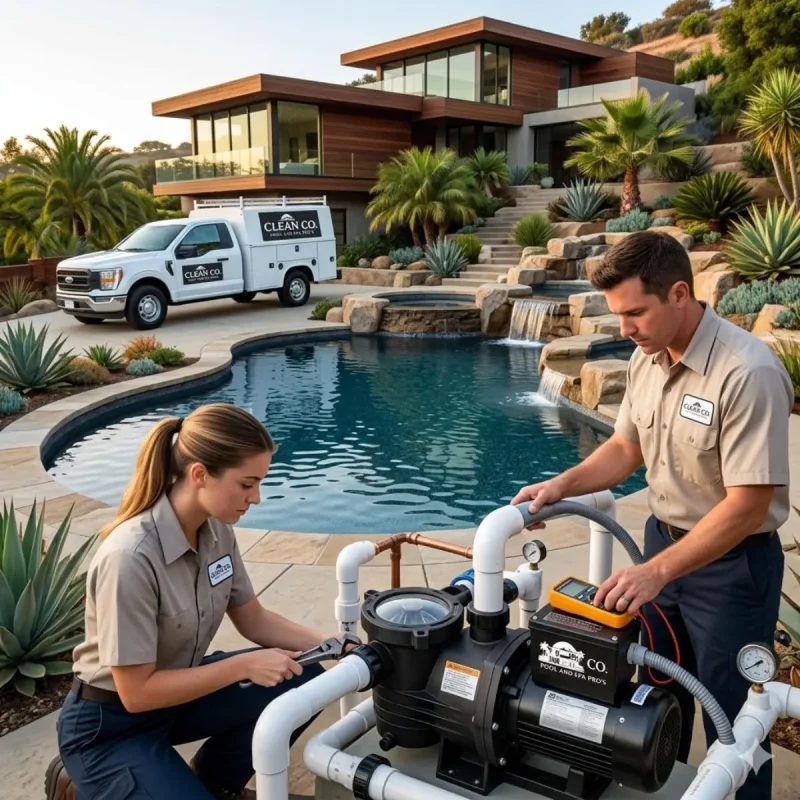
Old Pump Loud or Costly to Run? Get a Free Pump Installation Quote
We Are Experts With:




Why Choose a Variable Speed Pool Pump
An old single-speed pump runs flat out every minute it’s on, whether the pool needs that much flow or not. A variable speed pool pump can run slowly for most of the day and speed up only for jobs that need it, like vacuuming, running a spa or pushing water through a heater.
Slowing a pump down saves far more energy than it seems like it should. Cut the speed in half and the motor uses only a fraction of the power, not half. That’s why Pentair’s variable speed guide, citing ENERGY STAR, puts the savings at up to 90% compared with single-speed and two-speed pumps.
Slow running also means quieter equipment, gentler filtering and less wear on seals and bearings. For most pools in Milpitas, a variable speed pump is the upgrade that pays for itself fastest.
California’s Pool Pump Rules
State energy standards now favor efficient pumps. For most new pumps and replacement motors rated at half a horsepower and above, variable speed is required. In practice, an old single-speed pump is normally swapped for a variable speed one rather than another single-speed model.
The rules exist because pool pumps are one of the biggest electrical loads at many homes. Running slower for longer moves the same water for much less power.
Single Speed vs Variable Speed Pool Pumps
A single-speed pump has one setting: full speed. It’s cheaper to buy, simple to wire and easy to understand, but it spends most of its life moving more water than the pool needs and paying for every bit of it.
A variable speed pump uses a permanent magnet motor and a built-in drive that lets it run anywhere from a slow crawl to full power. It costs more up front and has electronics a single-speed pump doesn’t, but it’s quieter, runs cooler and uses a small fraction of the power at low speed. For a pool that circulates many hours a day, the math favors variable speed almost every time.
What Size Pool Pump Do I Need?
Bigger isn’t better with pool pumps. The right size depends on how many gallons the pool holds, how fast the water needs to turn over and how much resistance the plumbing, filter and heater add.
Start with turnover, the time it takes the pump to move the pool’s full volume through the filter. Six hours is a common design target. Divide the pool’s gallons by 360, the number of minutes in six hours, to get the flow rate in gallons per minute. A 20,000-gallon pool needs about 56 gallons per minute to turn over in six hours.
Then the pump has to deliver that flow against the system’s resistance, which pool pros call total dynamic head. Long pipe runs, small pipes, a heater and extra fittings all add to it.
Why an Oversized Pump Causes Problems
A pump that’s too big for the system pushes water faster than the filter can handle. Cartridge filters are especially sensitive to high flow, and dirt can be forced right through them. An oversized pump also pulls harder on the drains, which raises the risk of suction entrapment.
A pump that’s too small has the opposite problem. It can’t turn the water over, so the filter never gets through all of it and chemicals don’t mix well. Heaters, cleaners and water features may not get enough flow to work. Matching the pump to the system avoids both problems.
Pump, Filter and Heater Working Together
The pump sets the pace for everything else on the pad. The filter has a maximum flow rating, and pushing past it drives dirt through the media. Heaters and salt cells have minimum flow requirements, and they shut down or throw errors when the pump runs too slowly for them.
That’s why a variable speed pump needs more than one speed setting. A low speed handles everyday filtering, a middle speed covers the heater or salt cell, and a higher speed runs the spa or a cleaner. Getting those settings right is what makes the savings real without starving the rest of the equipment.
How Long to Run a Pool Pump
A good rule is to run the pump long enough to turn the water over at least once a day. With a single-speed pump, that often means 6 to 8 hours. A variable speed pump set to a low speed runs longer, often much of the day, and still uses less power.
Summer in Milpitas needs more circulation than winter. Heat, sun and swimmers all use up chlorine faster, and moving water keeps it mixed and filtered. In the cooler months, a shorter schedule usually keeps the water clear.
A new variable speed pump is only as efficient as its program. Part of our installation is setting speeds and run times that fit your pool, heater, cleaner and any water features.
Pairing the Pump With Automation
Variable speed pumps work best when something tells them what to do. Most can run on their own built-in schedule, but many also connect to a pool automation system from Hayward, Pentair or Jandy. Then the pump can speed up for the heater, the spa or the cleaner automatically and drop back down when the job is done.
If you’re thinking about automation, it’s easiest to plan it at the same time as the pump. Our pool automation page covers what’s possible.
Pool Pump Replacement Cost
The cost depends on the pump model, its horsepower and how much plumbing and electrical work the swap needs. Replacing a pump with one that fits the same pipes and wiring is the simplest job. Changing pipe sizes, moving the pump or adding automation takes more.
Variable speed pumps cost more up front than single-speed pumps. The lower monthly power bills usually make up the difference within a few seasons. Your free quote spells out the pump, the labor and the options.
Signs It’s Time for a New Pump
- A motor that has already been replaced or rebuilt and is failing again
- A cracked pump housing or strainer pot
- Loud bearings or constant seal leaks on an older pump
- Power bills that seem high for how the pool is used
- A single-speed pump that’s more than about eight years old
If the pump might still be worth fixing, our pool pump repair page covers the common repairs and how to weigh them.
How a Pump Installation Goes
- Measure the pool and check the plumbing, filter and heater.
- Recommend a pump sized for the system, with a free quote.
- Shut off power and water, then remove the old pump.
- Set the new pump and connect the plumbing with new unions where needed.
- Connect the wiring, plus bonding and grounding.
- Prime the pump and check for leaks.
- Program speeds and schedules, then test flow and pressure.
Electrical and Safety Requirements
Pumps are wired for either 115 or 230 volts, and the circuit has to match the new pump. Many variable speed pumps run on 230 volts, so switching from an older 115-volt pump can mean electrical changes. The pump also has to be bonded to the rest of the pool equipment and grounded under the electrical code.
Whenever a pump is replaced, the flow through the main drains should be checked. Drain covers are rated for a maximum flow, and a new pump shouldn’t exceed it.
Making a New Pump Last
- Empty the skimmer and pump baskets often so the pump always has water.
- Keep the filter clean, because a clogged one forces the pump to work harder.
- Run the lowest speed that keeps the water clear and the skimmers working.
- Give the motor shade and airflow on the pad.
- Never run the pump dry, even for a few minutes.
Our weekly pool service covers baskets, filter checks and the equipment on every visit.
Booking Pump Installation in Milpitas
For a pump quote, call (408) 317-7550 or reach us through the form on this page. It helps to know the brand and horsepower of your current pump, which are printed on the motor label. We install pumps in Milpitas and across the cities on the map below. For heaters, filters and lights, see our pool equipment installation page.
Pool Pump Installation Questions
Answers to what people ask before replacing a pool pump. Anything else? Call (408) 317-7550.
It depends on the pump model and horsepower and on any plumbing or electrical changes. A direct swap is simplest. We quote for free after checking the pool and equipment.
That's by design. Running slowly for many hours moves the same water for far less power than running fast for a few. It also filters better and runs quieter.
In most cases, yes. For new pumps and replacement motors from half a horsepower up, California requires variable speed. It also saves you money on power.
It depends on pool volume, turnover time and plumbing resistance. Divide the gallons by 360 for the flow needed to turn the water over in six hours, then match a pump to that flow.
Long enough to turn the water over at least once a day. A single-speed pump often needs 6 to 8 hours, while a variable speed pump runs longer at low speed for less power.
Yes. An oversized pump can push dirt through the filter, strain the equipment and pull too hard on the drains. Matching the pump to the system matters more than horsepower.
Usually. A straight replacement takes part of a day. Plumbing changes, new wiring or automation can add time, and we'll tell you up front.
Typically 8 to 12 years. A clean filter, empty baskets, shade on the motor and never running it dry all help it reach the long end.
If you're replacing a single-speed pump with a variable speed one, usually by a lot. The actual savings depend on your old pump, run times and electric rates.
Not always, but it's worth checking. A new pump should match the filter's flow rating, and an old or undersized filter can hold back a new pump.