
Green Pool Cleanup in Milpitas, CA
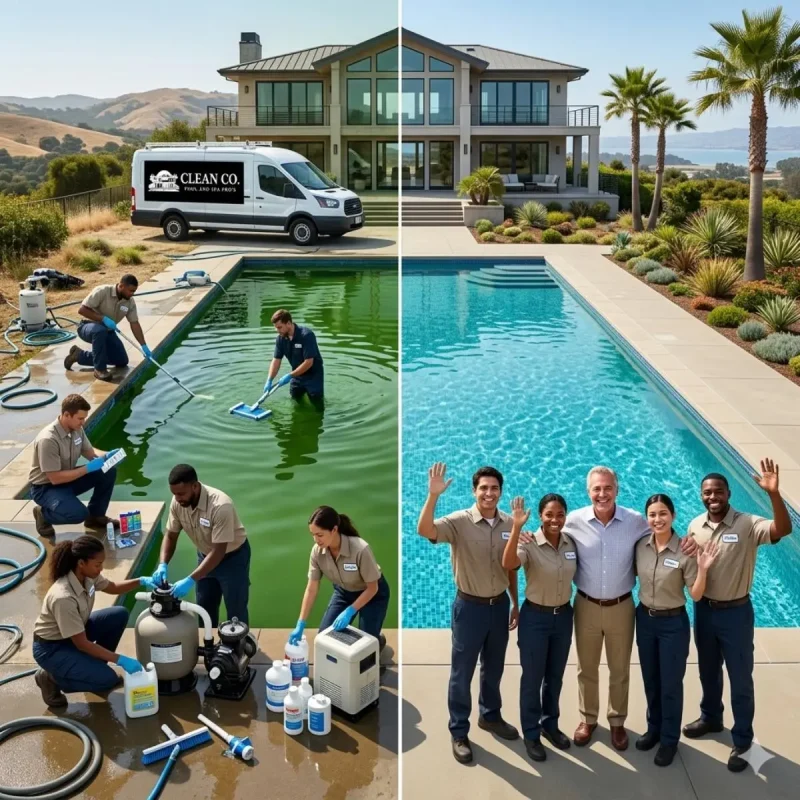
Algae-filled water brought back to clear, balanced and safe to swim, with the cause found and fixed.

Schedule Service!
Green to Clean Pool Service for Algae-Filled Pools
A green pool is an algae bloom, and algae only takes over when the chlorine runs out. Our green pool cleanup in Milpitas kills the algae, clears the dead growth out of the water and the filter, and balances the chemistry so the pool is safe to swim again.
What Our Green to Clean Service Covers
- Water testing, including stabilizer
- Shock treatment and algae removal
- Brushing and vacuuming
- Filter cleaning, more than once if needed
- Chemical balancing
- A check of the pump and timer
Fixing the Cause, Not Just the Color
Clearing the water is half the job. The other half is finding out why the chlorine ran out, so the pool doesn’t turn green again next month.
Pool Turned Green? Get a Free Green to Clean Quote
We Are Experts With:




Why Is My Pool Green?
Algae spores blow into every outdoor pool, every day. Normally the chlorine kills them before they can grow. Once the chlorine drops to zero, even for a short stretch, those spores start multiplying, and the water turns green.
The usual reasons the chlorine ran out:
- The pump stopped running, or the timer got knocked out of schedule
- A hot spell or a pool party burned through the chlorine faster than normal
- Nobody added chlorine while the owners were away
- Stabilizer has built up so high that the chlorine can’t work well
- A dirty filter or poor circulation left dead spots in the pool
Most green pools have more than one of these going on at once. Finding all of them is what keeps the pool clear after we leave.
How Fast a Pool Turns Green
Faster than most people expect. In warm water with no chlorine, some algae can turn a clear pool green in less than a day. A Milpitas heat wave in July, with the pump off, is close to ideal for it.
It usually starts as a faint haze or a slippery feel on the walls. Then the water takes on a light green tint, and within a few days it can go dark and murky. The earlier you catch it, the faster and cheaper it is to clear.
Is It Safe to Swim in a Green Pool?
No. The algae itself usually isn’t what makes people sick. The problem is what comes with it. Green water means the chlorine is gone, so nothing is killing the germs that cause swimming illnesses. Algae can also shelter bacteria.
Visibility is a real safety issue too. In cloudy green water, you can’t see the bottom, or a swimmer who’s in trouble. Algae on the floor and steps is slippery, and it’s easy to slide into the deep end. Keep everyone out until the water is clear and the chlorine is back in range.
How to Clear a Green Pool
- Test the water for chlorine, pH, alkalinity and stabilizer.
- Skim out leaves and debris so the chlorine isn’t wasted on them.
- Bring the pH into range so the chlorine works at full strength.
- Shock the pool with a large dose of chlorine, sized to the water and the stabilizer level.
- Brush every wall, step and corner to break up the algae.
- Run the pump around the clock and clean the filter as it loads up.
- Keep the chlorine high until the water clears and the chlorine holds overnight.
- Vacuum the dead algae off the floor, then balance the water.
The key is keeping the chlorine high long enough. One big dose that fades by the next day lets the algae grow right back.
Pool Still Green After Shocking?
This is one of the most common frustrations with a green pool. It usually comes down to one of four things.
First, not enough chlorine. A green pool needs far more than a normal dose, and it has to stay high for days, not hours. Second, too much stabilizer. Stabilizer protects chlorine from the sun, but too much of it slows the chlorine down and raises the risk of algae. The only practical fix is draining part of the water and refilling with fresh.
Third, the pH is high, which weakens the chlorine. Fourth, the filter or pump isn’t keeping up, so dead algae just circulates. Fix all four and the pool will clear.
Green, Yellow and Black Algae
Green algae is by far the most common, and it’s also the easiest to kill. Yellow algae, sometimes called mustard algae, clings to shady walls and often needs a product made for it. Black algae grows in dark spots with poor circulation, like deep corners, and roots itself into plaster.
Black algae is the stubborn one. It usually takes hard brushing with a steel brush on plaster, plus heavy chlorine and patience. A plastic brush is the right choice on vinyl, since steel tears the liner.
Why the Filter Matters So Much
Killing the algae is only the first step. All that dead algae has to go somewhere, and the filter catches most of it. During a cleanup, a filter can clog several times over, and a clogged filter stops clearing the water.
So during a cleanup we clean or backwash the filter whenever the gauge climbs, sometimes daily. A cartridge filter may need a deep clean at the end. Our pool filter cleaning page explains how each filter type gets cleaned.
Cloudy Water After the Green Is Gone
A pool often goes from green to a cloudy blue or gray before it’s fully clear. That haze is dead algae and fine particles too small for the filter to catch at first. It’s a good sign, not a setback.
Leave the pump on and hold the chlorine where it is. Over the next day or two, the filter catches up. A clarifier can help the filter trap the finest particles. Vacuuming the settled dust off the floor speeds things up too.
When Draining Makes More Sense
Most green pools can be cleared without draining. Draining costs a lot of water, and an empty pool can be damaged by ground water if it isn’t done carefully. Chemicals and filtering are almost always the better route.
There are exceptions. When stabilizer is extremely high, the chlorine may never work well until part of the water is replaced. A pool that has sat for months full of leaves and sludge may also clear faster with a partial drain. If algae has stained the plaster once the water is clear, our pool acid wash page covers the options.
Green Pools After a Move or a Long Trip
Plenty of green pools belong to homes that just changed hands, or to owners who were gone for a few weeks. The pump timer got reset, or nobody was adding chlorine, and summer did the rest.
If you’re buying a home with a green pool, it’s worth having the equipment checked along with the water. A pump that won’t run or a filter with a cracked tank will turn the pool green again no matter how much chlorine goes in.
Neglected Green Pools and Mosquitoes
A pool that sits green for weeks does more than look bad. Standing, untreated water is a breeding ground for mosquitoes, and a single backyard pool can affect the whole block.
The county Mosquito and Vector Control District takes reports of neglected and abandoned pools, and you can file one anonymously. If you’ve just bought a home with a long-abandoned pool, clearing it quickly is good for the neighbors as well as for you.
Green Pool Cleanup Cost
Pricing for a green to clean job comes down to how big the pool is and how far gone it is. A light green tint takes much less chlorine and time than a swamp with no visible steps. Heavy debris, very high stabilizer or equipment that isn’t running add to the work.
Chemicals, brushing, vacuuming and filter cleaning are included in that price. You get a free quote once we’ve looked at the water, so there are no surprises.
Keeping a Pool From Turning Green Again
- Keep chlorine in the water at all times, since the nutrients algae needs are always there.
- Run the pump daily so all the water passes through the filter at least once.
- Brush the walls, steps and corners weekly, especially shady spots.
- Watch the stabilizer, since chlorine tablets add more with every one that dissolves.
- Test more often in hot weather and after heavy use.
If the pump or timer caused the problem, see pool pump repair. For steady chemistry every week, our weekly pool service keeps the chlorine from running out in the first place.
Booking Green Pool Cleanup in Milpitas
Reach us at (408) 317-7550 or through the request form, and a photo of the pool helps us plan. The sooner we start, the less chlorine and time it takes. Green pool jobs cover Milpitas and the neighboring cities on the service map. For our other one-time jobs, see specialty pool services.
Green Pool Cleanup Questions
Straight answers for owners staring at a green pool. Want us to take a look? Call (408) 317-7550.
It depends on pool size and how green it is. A light tint costs far less than dark, murky water. The quote is free.
No. Green water means the chlorine is gone, so germs aren't being killed. You also can't see the bottom or a swimmer in trouble.
Usually the chlorine didn't stay high long enough, stabilizer is too high, the pH is high, or the filter isn't keeping up.
Almost always. Shock, brushing and steady filtering clear most green pools. Draining part of the water helps mainly when stabilizer is very high.
Something keeps letting the chlorine run out: a pump or timer problem, too much stabilizer, poor circulation or chlorine that isn't added often enough.
That haze is dead algae and fine particles. With the pump on and chlorine held steady, the filter usually clears it within a day or two.
Not on its own. Chlorine does the real work. Algaecide helps prevent regrowth, and copper types can stain plaster if overused.
Dark blue-green or black spots, often in corners and shady areas. It roots into plaster and takes hard brushing and heavy chlorine to remove.
It's usually copper, not chlorine. High copper levels, often from copper algaecides or corroded equipment, can give blond hair a greenish tint.
Dead algae clogs the filter, and a pump starved by a clogged filter works harder. Clearing the pool includes cleaning the filter for that reason.