
Pool Pump Repair in Milpitas, CA
Pumps that won’t prime, run loud, leak or hum without starting, fixed and moving water again.

Schedule Service!
Swimming Pool Pump Repair for Single-Speed and Variable Speed Pumps
Nothing in the pool works without the pump. Our pool pump repair in Milpitas gets it priming, running quietly and pushing water again, whether the trouble is in the motor, the shaft seal, the impeller or the plumbing that feeds it.
What Our Pump Repair Covers
- Pool pump motor repair
- Pump leak and shaft seal repair
- Variable speed pump repair
- Impeller replacement
- Plumbing and circulation checks
- Pump noise and pressure problems
Repair First, Replace When It Pays
Seals, capacitors, impellers and bearings are all replaceable, and fixing them is usually the cheaper move. When the motor is near the end of its life, a new variable speed pump can cost less over time than another repair. We’ll lay out both options.
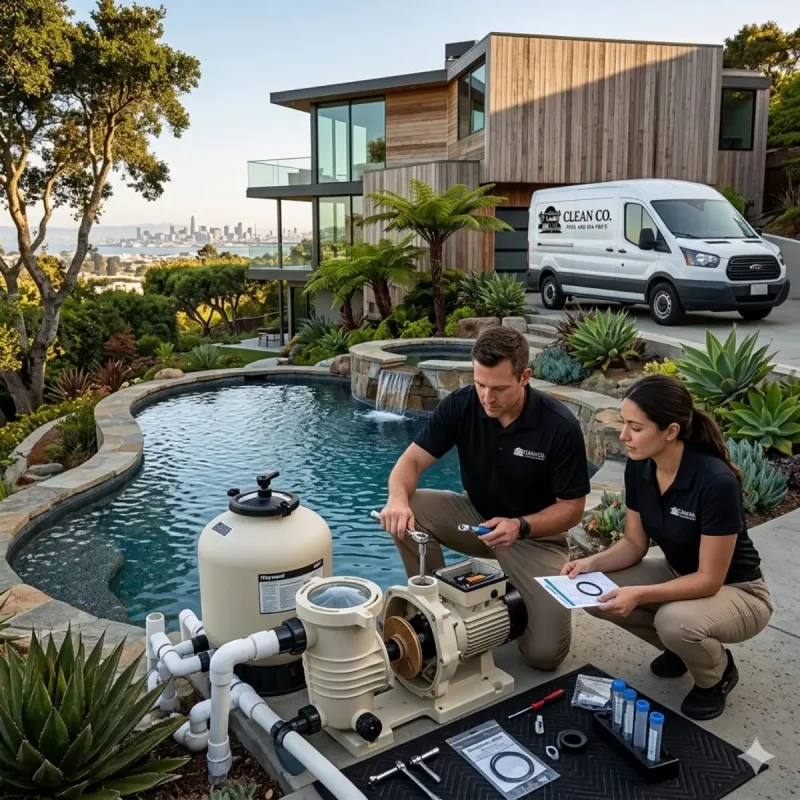
Pump Humming, Leaking or Losing Prime? Get a Free Repair Quote
We Are Experts With:




Signs Your Pool Pump Needs Repair
A healthy pump is quiet, holds its prime and keeps a steady reading on the filter gauge. These signs mean something has changed:
- The pump won’t prime, or the basket is full of air
- Grinding, screeching or a rattle like gravel inside the housing
- A hum with no spin when the pump tries to start
- Water on the pad under the pump or between the pump and motor
- The motor shuts itself off after running for a while
- Weak flow at the returns or a filter gauge reading lower than usual
- Air bubbles at the return jets
- A breaker that trips when the pump starts
Caught early, most of these are small repairs. Left alone, a leaking seal or a starving pump can take the motor with it. Our weekly pool service includes a check for leaks and odd noises on every visit, which is often how these get caught early.
Pool Pump Not Priming
A self-priming pump can pull water up from the pool on its own, but only if its suction side is airtight. When a pool pump is not priming, the usual cause is air getting in somewhere before the impeller:
- A loose pump lid or a worn lid O-ring
- A leak at a fitting, especially the first one threaded into the strainer housing
- A leaking suction valve or cracked suction pipe
- A clogged suction line or skimmer
- Water level too low, so the skimmer sucks air
- A damaged impeller that can’t move enough water
To prime a pool pump, switch it off and bleed the filter through its air relief valve. Take off the pump lid, fill the strainer pot with water, seat the lid snugly and restart. No catch within a few minutes? Stop the pump. Running it dry heats up and ruins the shaft seal.
Why Is My Pool Pump So Loud?
The type of noise usually points to the cause. A rattle that sounds like gravel in the housing is cavitation. The impeller is starving for water, often from a clogged basket, a partly closed suction valve, a suction leak or a low water level. Cavitation is hard on the pump and should be fixed quickly.
A steady screech or grind that gets louder over time is usually the motor bearings. Bearings wear out with age, but they fail much sooner when a leaking shaft seal lets water drip into the motor.
A loud hum or buzz with a vibration you can feel may just be a pump that has worked loose from its base. Tightening it down fixes that one.
Pump Hums but Won’t Start
A motor that hums but won’t spin is getting power but can’t get moving. The most common cause is a failed start capacitor, a small part that gives the motor its kick at startup. Low voltage from a loose connection, undersized wiring or an overloaded circuit does the same thing.
If the shaft feels tight or gritty when turned by hand with the power off, the problem is mechanical. Worn bearings, a bent shaft or debris jammed in the impeller can all lock it up.
Leave the electrical side to a pro. Pump motors run on 115 or 230 volts, and wiring mistakes damage motors and put people at risk.
Pool Pump Leaking
Where the pool pump is leaking tells you what failed. Water dripping from the gap between the pump and the motor is almost always the shaft seal. It’s an inexpensive part, but ignore it and the water works its way into the motor bearings, turning a small repair into a new motor.
Leaks at the lid usually mean a dry or flattened O-ring. Drips at the unions or threaded fittings point to worn O-rings or cracked threads. A crack in the pump housing itself usually means replacing that part of the pump.
Strong chemicals fed near the pump’s suction side speed up seal failure, so chlorine should never go in right ahead of the pump.
Motor Overheating and Tripping Off
A pump motor that runs all day can feel hot to the touch, and that alone isn’t a problem. Motors have a thermal overload that shuts them off when they get too hot, then restarts them once they cool. If yours keeps cycling off, something is making it run hotter than it should.
Common causes include low voltage, long or undersized wires, a clogged cooling fan and a motor boxed into a tight space with no airflow. Shade helps in a hot Milpitas summer, but any motor cover still needs room for air to move. Heat breaks down the motor’s insulation over time, so an overheating motor wears out years early.
Clogged Impellers and Weak Flow
Leaves, seed pods, hair and small toys can slip past the pump basket and lodge in the impeller. The pump still runs, but it moves far less water. Flow at the returns drops, the filter gauge reads low and the pool starts to struggle.
A dirty filter, a clogged return or a half-closed valve drags pressure down too. Checking those first saves pulling the pump apart for nothing. Keeping the skimmer and pump baskets empty is the best way to protect the impeller. If the filter turns out to be the real problem, see pool filter repair for what can fail inside it.
Variable Speed Pump Problems
Variable speed pumps save a lot of energy by running slowly for long stretches, but they add electronics that single-speed pumps never had. Most problems show up as an error code on the drive: overheating, voltage faults, loss of prime or a communication error with the automation system.
California has been pushing pools toward these pumps for years. Under the state’s current rules, most replacement pool pump motors of half a horsepower or more must be variable speed. So if an older single-speed motor fails, the fix is often a variable speed upgrade rather than a like-for-like swap.
How a Pump Repair Goes
- Watch and listen to the pump running, and check the pressure reading.
- Rule out the easy causes: baskets, valves, water level and the filter.
- Shut off the power at the breaker before touching the motor or plumbing.
- Open the pump and check the lid O-ring, impeller, shaft seal and diffuser.
- Test the capacitor, wiring and voltage if the motor won’t start.
- Replace the failed part, prime the pump and confirm steady flow and pressure.
How Long Does a Pool Pump Last?
Most pool pumps last about 8 to 12 years. Motors that run cool, stay dry and never run without water tend to reach the top of that range. Constant heat, a leaking seal, low voltage or repeated dry running bring the end much sooner.
Age matters when you decide what to fix. A new seal on a three-year-old pump is an easy call. A new motor on a pump that’s ten years old deserves a second look.
Repair or Replace a Pool Pump
Repair makes sense when the pump is fairly young and the problem is a seal, capacitor, impeller, lid or bearing. Replacement makes more sense when the housing is cracked, the motor has failed on an older pump or the pump is too large or too small for the system. A new variable speed pump also lowers the power bill every month it runs. Our pool pump installation page covers what a replacement involves.
Pool Pump Repair Cost in Milpitas
The price depends on the part. A lid O-ring or capacitor is a small repair, a shaft seal or impeller costs more, and a motor replacement is the biggest job short of a new pump. We repair Pentair, Zodiac, Hayward and Jandy pumps, and there’s no charge for the quote.
Booking Pump Repair in Milpitas
Call (408) 317-7550 or fill out the form up top. Tell us what the pump is doing, whether it hums, leaks, screeches or won’t prime, and the brand if you know it. We work out of Milpitas and cover the cities listed below. Filter, heater and spa problems are covered on our main pool repairs page.
Pool Pump Repair Questions, Answered
Short answers about pumps that won’t prime, run loud or leak. Anything else, just call (408) 317-7550.
It depends on the part. O-rings and capacitors are small repairs, seals and impellers cost more, and a motor is the biggest repair short of a new pump. Quotes are free.
Usually air leaking into the suction side: a loose lid, a worn lid O-ring, a leaky fitting or valve, or a low water level. A clogged impeller or suction line can also stop it.
Switch the pump off, bleed the filter at its air relief valve, fill the strainer pot with water and seal the lid. Restart it. If it won't catch within a few minutes, stop and look for an air leak.
A gravel sound is usually cavitation from a starved pump. Screeching or grinding points to worn bearings. A loud hum with vibration can mean the pump has worked loose from its base.
Most often a failed start capacitor or low voltage. A seized shaft, worn bearings or debris jammed in the impeller can also stop the motor from turning.
That's almost always the shaft seal. Replace it soon, because water that reaches the motor bearings ruins them and can turn a small repair into a new motor.
Usually about 8 to 12 years. Heat, a leaking seal, low voltage and running the pump dry all shorten its life.
Yes. Even a few minutes dry can overheat and damage the shaft seal, and repeated dry runs can harm the motor. Shut it off if it won't prime.
The motor's thermal overload is tripping because it's running too hot. Low voltage, undersized wiring, a clogged fan or poor airflow around the motor are common causes.
In California, most replacement pool pump motors of half a horsepower or more must be variable speed. A variable speed pump also costs far less to run.