
Pool Sand Changes in Milpitas, CA
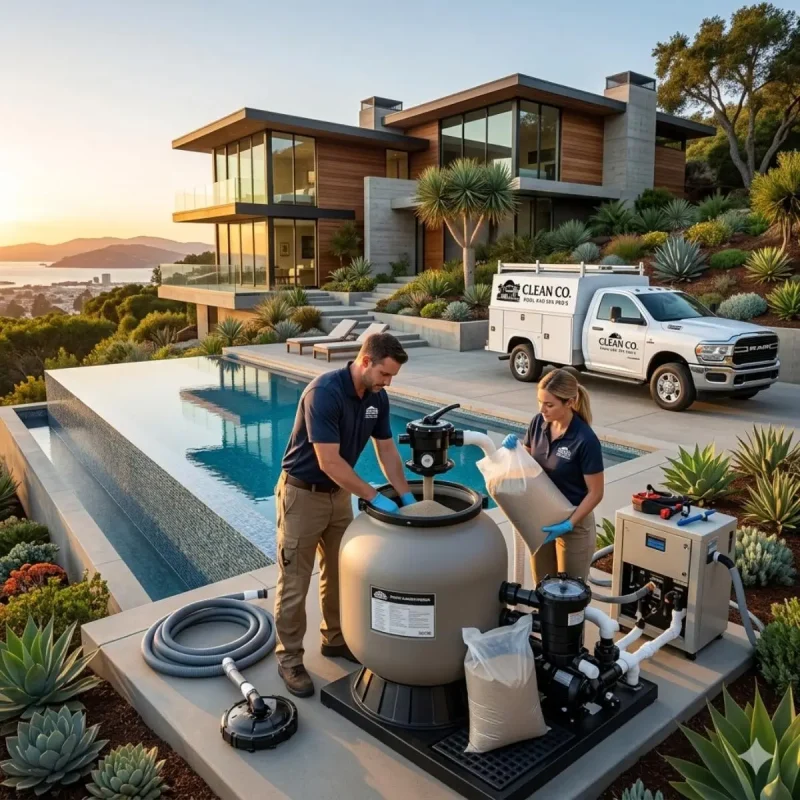
Worn filter sand swapped for fresh media, laterals checked and the filter flushed and back to clear water.

Schedule Service!
Pool Filter Sand Replacement Done Right
Sand filters are simple and tough, but the sand inside them doesn’t last forever. Our pool sand changes in Milpitas empty the old media, check the parts underneath, refill the tank with the right sand in the right amount and flush it before it goes back into service.
What Our Sand Change Covers
- Old filter sand removed
- Tank cleaned and laterals inspected
- Fresh #20 silica sand, filled to spec
- Backwash flush of new sand
- Pressure and flow checked after startup
Test the Water First
Cloudy water isn’t always a sand problem. We check the chemistry and the backwash routine before recommending new sand.
Water Cloudy With a Sand Filter? Get a Free Sand Change Quote
We Are Experts With:




Why Pool Filter Sand Needs Changing
A sand filter pushes pool water down through a bed of sand. New sand grains have sharp, jagged edges, and dirt catches on those edges and in the tiny gaps between grains. As dirt builds up, the gaps get smaller and the filter catches finer and finer particles, right up until it’s time to backwash.
Over the years, that constant flow and backwashing wears the grains smooth. Rounded sand can’t grab dirt the way sharp sand does, so more of it slips past the bed and returns with the water. Oils and minerals also coat the grains and stick them together. Fresh sand brings back the sharp edges and open bed the filter needs.
Most of the filtering happens in the top few inches of sand. That’s why that top layer wears out and clogs first.
How Often to Change Pool Filter Sand
Filter sand typically lasts somewhere between 5 and 15 years. Where your pool lands in that range depends on how much it’s used, how much debris it gets and how well the water is balanced.
Heavy tree cover, lots of swimmers and plenty of sunscreen all wear sand out faster. Hard water and high pH leave mineral deposits that cement the bed. A lightly used pool with steady chemistry can go much longer. Watching how the filter behaves tells you more than the calendar does.
Signs Your Filter Sand Is Worn Out
- Cloudy water even with good chemistry and a clean filter
- Pressure that climbs back up soon after every backwash
- Pressure that stays high even right after backwashing
- Sand that feels hard, crusty or clumped when you dig into the top
- Water that clears slowly after a storm or a busy weekend
If the pressure stays high after a good backwash, the sand bed may be clogged with mineral deposits that backwashing can’t remove.
Mud Balls, Channeling and Caked Sand
Old sand fails in a few specific ways. Oils and fine particles clump together into mud balls that sink into the bed. Water then flows around them instead of through clean sand.
Channeling is when water cuts a path through the sand bed and bypasses most of it. Unfiltered water goes straight back to the pool. Caked sand forms when minerals, or clarifiers and flocculants used over and over, glue the grains into a solid mass. None of these can be backwashed away. Once they set in, new sand is the fix.
What Kind of Sand for a Pool Filter
Pool filters use #20 silica sand, with grains roughly 0.45 to 0.55 millimeters across. Suppliers wash and grade it so the grains all come out close to the same size. That size is fine enough to trap dirt, but too coarse to slip through the slots at the bottom of the filter.
Play sand, masonry sand and other substitutes are the wrong size and shape. Sand that’s too fine clogs quickly or washes out during backwashing. Sand that’s too coarse lets dirt through. Always match what your filter’s label calls for.
How Much Sand for a Pool Filter
The amount depends on the filter’s size, and you’ll find it on the filter’s label or in its manual. As an example, Hayward’s 22-inch ProSeries filter takes 250 pounds of #20 silica sand. Bigger tanks take more.
More isn’t better. The space above the sand, called freeboard, lets the bed lift and expand during a backwash, and it’s usually about half the depth of the sand. Overfill the tank and backwashes take longer and the sand can shift around. Filling to the manufacturer’s amount leaves the right gap.
How to Change Sand in a Pool Filter
- Shut the pump off, then release the pressure at the air relief valve.
- Drain the filter and remove the valve or lid.
- Scoop or vacuum out the old sand, taking care around the standpipe and laterals.
- Rinse the tank and inspect the laterals for cracks.
- Fill the tank partway with water to cushion the laterals.
- Pour in the new sand, keeping the standpipe centered.
- Clean the threads and O-ring, then reassemble the filter.
- Backwash to flush fine dust out of the new sand, then rinse and return to filter mode.
Old sand is wet and heavy, and a filter holds hundreds of pounds of it. That’s the part of the job most people underestimate. Getting it out without cracking a lateral or knocking the standpipe off center takes patience, and a shop vacuum helps once the top layer is gone.
Pressure Filter Safety
A sand filter runs under pressure. Opening one while it’s still pressurized can blow the lid or clamp off with real force. Before touching the valve, lid or clamp, switch the pump off and let the pressure out through the air relief valve.
The same goes for switching the multiport valve. Change positions only with the pump off, or the valve’s internal seal can tear.
Checking the Laterals
At the bottom of every sand filter sits a set of slotted arms called laterals. They let water through and hold the sand back. When one cracks, sand escapes into the pool, usually showing up as a little pile near the return jets.
A sand change is the best time to check them, since they’re exposed and easy to reach. We replace any cracked laterals before the new sand goes in. For other filter problems, see pool filter repair.
After the Sand Change
New sand carries fine dust from processing. The first backwash flushes most of it out. If it stays in the bed, oils stick to it and mud balls form early.
After startup, note the new clean pressure on the gauge. That’s your baseline for knowing when to backwash from here on. Backwash by pressure, not on a fixed schedule, since the filter actually traps finer dirt as it loads up. For more on backwashing, see pool filter cleaning.
Keeping New Sand Working Longer
- Backwash when the pressure rises, not on a fixed day.
- Keep pH and calcium in range so minerals don’t cement the sand.
- Go easy on clarifiers and flocculants, which can glue the bed together over time.
- Empty skimmer and pump baskets so leaves don’t break down in the system.
- Rinse off sunscreen before swimming when you can, since oils coat the grains.
Pools on a weekly pool service route get the pressure and chemistry checked at every visit.
Glass and Zeolite Filter Media
Sand isn’t the only option. Some owners switch to crushed glass or zeolite, which can trap finer particles. Both cost more than silica sand.
Before switching, check what your filter’s maker allows. Some approve only silica sand in their filters, and using something else can affect the warranty. We’ll tell you what your filter is rated for.
When to Replace the Whole Filter
If the tank is cracked, the valve is failing or the filter is too small for the pump, new sand won’t help much. Putting fresh sand in a tank that’s about to fail is money spent twice.
That’s also the moment to consider a cartridge filter, which uses no backwash water at all. New filters are covered under pool equipment installation.
Pool Sand Change Cost
Several things set the price of a sand change: the size of the filter, the amount of sand it takes, if the laterals need replacing and how hard the old sand is to remove. Caked sand that has to be broken up takes longer.
New sand, labor, the lateral check and the startup flush are included. You’ll have a free quote covering everything before we open the tank.
Booking a Sand Change in Milpitas
To book, call (408) 317-7550 or send a request online. If you know the brand and size of your filter, it helps us bring the right amount of sand. Sand changes are available in Milpitas and nearby cities on the service map. Acid washes, green pool cleanups and more are on our specialty pool services page.
Pool Sand Change Questions
What owners ask before swapping the sand in a pool filter. Still unsure? Call (408) 317-7550.
It depends on the filter size, how much sand it takes, the laterals' condition and how hard the old sand is to remove. We quote for free.
#20 silica sand, with grains about 0.45 to 0.55 millimeters. Play sand and other substitutes are the wrong size and cause problems.
It depends on the tank size and is listed on the filter's label. Hayward's 22-inch ProSeries, for example, takes 250 pounds.
Cloudy water with good chemistry, pressure that climbs soon after backwashing, or sand that's clumped and crusty all point to worn sand.
Only if they're cracked or brittle. With the tank empty they're easy to inspect, so it's the best time to swap any damaged ones.
No. Play sand is the wrong size and shape. It can clog the filter or wash through into the pool.
Clumps of oil, dirt and fine particles that form in old sand. Water flows around them, so filtering suffers. New sand is the fix.
Yes. The first backwash flushes fine dust out of the new sand before it can clump with oils.
It can trap finer particles, but it costs more and not every filter maker approves it. Check your filter's manual first.
Usually a few hours for a typical residential filter. Caked sand or broken laterals add time.