
Pool Heater Installation in Milpitas, CA
Gas heaters and heat pumps sized to your pool, installed cleanly and tested before we leave.

Schedule Service!
Pool Heater Replacement and New Heater Installs
A new heater should warm the pool when you want it warm without running up the gas or power bill. Our pool heater installation in Milpitas starts with the right type and size for your pool and spa, then gets it plumbed, wired and tested so it runs well from day one.
What Our Heater Installation Includes
- Gas pool heater installation
- Electric heat pump installation
- Spa heater installation
- Replacement of old heating systems
- Thermostat and control setup
- Plumbing, wiring and circulation checked before startup
Gas Heater or Heat Pump?
We install both, and the right one depends on how you use the pool. The sections below walk through the tradeoffs so you can pick with the numbers in front of you.
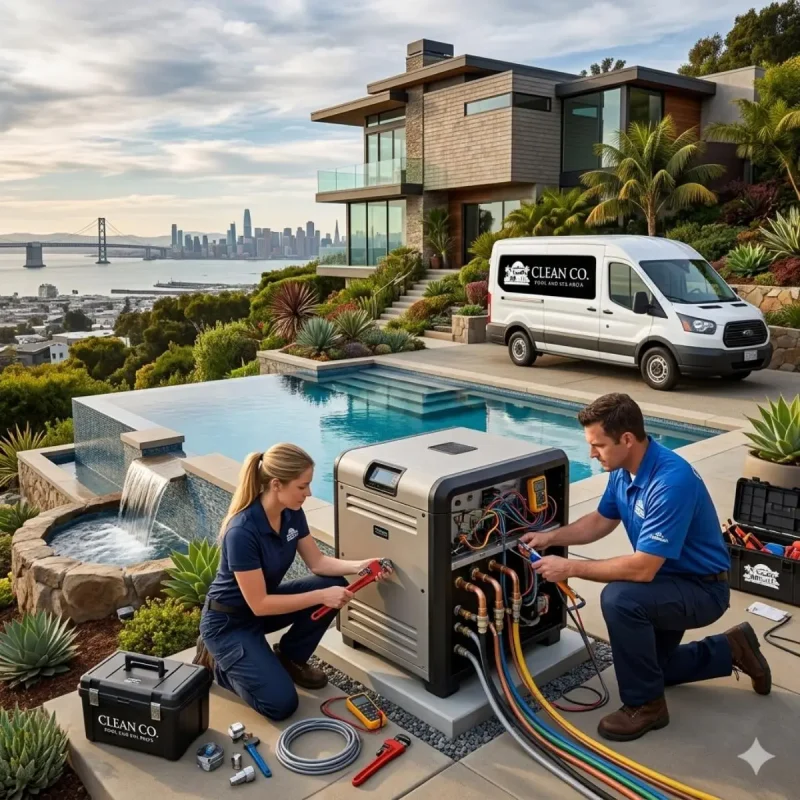
Ready for a Warmer Pool? Get a Free Heater Installation Quote
We Are Experts With:




Pool Heat Pump vs Gas Heater
Gas heaters and heat pumps both warm a pool, but they do it very differently. A gas heater burns natural gas or propane and heats the water fast, in any weather. A heat pump draws warmth from the surrounding air with a compressor and refrigerant, so it heats more slowly but costs far less to run.
Because a heat pump moves heat instead of making it, one unit of electricity can yield several units of heat, often three or more. A gas heater can never put out more heat than the fuel it burns. Pentair’s heater guide sums it up well: gas costs less up front and heats fast, while heat pumps cost more to buy but less to run, and they do best in mild to warm climates.
Many pool owners end up with both on the same system: a heat pump to keep the pool warm through the season and a gas heater to bring the spa up to temperature quickly.
Which Heater Fits a Milpitas Pool
Milpitas has the kind of mild climate heat pumps like. Spring and fall days are usually warm enough for a heat pump to hold the pool at a comfortable temperature for weeks at a time, and summer afternoons make it even easier.
A gas heater makes more sense if you swim only now and then and want the water warm on short notice, if you heat an attached spa often, or if you want to swim through the cold months. It’s also the practical choice where a heat pump’s larger footprint or electrical needs won’t fit the equipment pad.
If you plan to keep the pool warm from April through October, a heat pump usually pays back its higher price in lower monthly bills.
What Size Pool Heater Do I Need?
Sizing starts with a simple formula. Multiply the pool’s gallons by 8.33, then by how many degrees you want to raise the water. The answer is the BTUs needed for the first heat-up. A 20,000-gallon pool warmed 10 degrees needs about 1.7 million BTUs.
Divide that by the heater’s output to see how long it will take. At 400,000 BTUs an hour, a large gas heater would need roughly four to five hours of burner time. A smaller heater takes longer, and one that’s too small may never keep up on cool, windy nights.
Keeping the pool warm takes much less energy than the first heat-up. For that, the pool’s surface area matters more than its volume, since most heat escapes from the surface. A spa is the opposite: what matters is how fast the heater can bring a small volume up to temperature.
Heating an Attached Spa
A spa built into the pool usually shares the pool’s heater. When you switch to spa mode, the valves send water through the spa only, and the heater brings that small volume up fast. That’s where a gas heater shines. A heat pump can heat a spa, but it takes a lot longer.
If the spa gets used a few nights a week, size the heater with the spa in mind, not just the pool. A heater that holds the pool at 82 degrees may take far too long to get the spa to 102.
Pool Heater Installation Cost
The price depends on the type and size of heater, the gas or electrical work needed and how much the plumbing has to change. Replacing an old gas heater with a new one of the same size is the simplest job. Switching from gas to a heat pump, or adding a heater where none existed, usually means new electrical work, a new gas line or both.
Heat pumps cost more to buy than gas heaters of similar output. Gas heaters cost more to run. Over several seasons of regular use, the heat pump often comes out ahead. The free quote lays out both options side by side.
Gas Line and Electrical Requirements
A gas heater needs a gas line sized for its full output. Many older homes have a line that was sized for a smaller heater or a single appliance, and an undersized line starves the burner. A new heater may need a larger line from the meter.
Heat pumps need their own dedicated electrical circuit, usually 240 volts, sized for the unit’s compressor. Both kinds of heaters need proper bonding and grounding under the electrical code. Gas and electrical work of this kind generally requires a permit, so plan on an inspection as part of the job.
Natural Gas or Propane
Most gas pool heaters run on natural gas from the utility line. Propane is an option where there’s no gas service, but it needs a storage tank, regular deliveries and a heater set up for propane.
The two gases behave differently. Natural gas is lighter than air and drifts away if it leaks. Propane is heavier than air and settles low, which is why propane heaters need careful installation and proper ventilation around the burner.
Where the Heater Goes on the Pad
Placement matters. The heater should sit downstream of the pump and filter, so it gets clean water at steady flow. Any chlorinator, salt cell or chemical feeder belongs downstream of the heater, because concentrated chemicals flowing through a heater corrode it.
A gas heater needs a level, noncombustible base and clearance from walls, windows and roof overhangs for safe venting. Heat pumps need open air around them to pull heat from. A heat pump boxed into a tight corner recirculates its own cold exhaust and loses much of its output. Replacing the pump at the same time? Variable speed models pair well with a new heater, and pool pump installation explains the options.
How a Heater Installation Goes
- Check the pool’s size, how you use it and what the pad can hold.
- Recommend a type and size, with a free quote.
- Remove the old heater if there is one.
- Set the new heater on a proper base and connect the plumbing.
- Connect gas or electrical service, plus bonding and grounding.
- Double-check every pipe joint, wire connection and valve setting.
- Fire it up, test the controls and walk you through the settings.
How Long Does a Pool Heater Last?
Expect roughly 5 to 10 years from a gas heater and 10 or more from a heat pump. Water chemistry has as much to do with it as the brand. Scale from high calcium and pH shortens a heater’s life, and so does corrosion from low pH or from chlorine fed ahead of the heater.
A heater that’s already needed several repairs, or one with a leaking heat exchanger, is usually a better candidate for replacement than another fix. If yours might still be worth saving, see pool heater repair for the usual fixes.
Signs It’s Time to Replace Your Heater
- A heat exchanger that leaks or has corroded through
- Repairs every season, each one bigger than the last
- Parts that are no longer made for your model
- Heat-up times that keep getting longer with no fix in sight
- Gas or power bills that jumped with no change in how you use the pool
Getting the Most From a New Heater
- Cover the pool when nobody’s swimming. Evaporation at the surface is where most of the heat goes, and covers can cut heating bills 50 to 70 percent.
- Clean the filter on schedule, since low flow keeps a heater from firing. Our weekly pool service handles that along with the chemistry.
- Hold pH, alkalinity and calcium steady so scale and corrosion stay out of the heat exchanger.
- Set a realistic temperature. Every extra degree costs more to hold.
- Plant a hedge or add a fence on the windy side. Moving air strips heat off the water.
Booking Heater Installation in Milpitas
To set up a heater consultation, use the request form above or call (408) 317-7550. Tell us the pool’s size if you know it, if you have a spa, and how often you’d like to swim. We install heaters throughout Milpitas and the nearby cities on the map below. Pumps, lights and other equipment are on our pool equipment installation page.
Pool Heater Installation Questions
What people ask us before choosing a new heater. Still deciding? Call (408) 317-7550.
It depends on the heater type and size and on any gas, electrical or plumbing changes. A same-size gas swap is simplest. The quote is free once we've seen the pool and pad.
A heat pump costs more to buy but much less to run, and it suits Milpitas's mild climate. Gas heats faster in any weather, which makes it better for spas and occasional use.
Multiply gallons by 8.33 by the degrees you want to add to get the BTUs for the first heat-up. Surface area, wind and a cover (or lack of one) decide what it takes to hold that temperature.
A straight swap of a similar heater can often be done in a day. New gas lines, electrical circuits or permits add time, and we'll give you the schedule with the quote.
Roughly 5 to 10 years for gas and 10 or more for a heat pump. Balanced water and a clean filter help either one reach the long end.
It keeps running, but its output drops as the air cools, so it heats slowly on cold days. For swimming in winter or heating a spa quickly, gas is usually the better tool.
Usually yes, for the gas line and electrical work. The permit and inspection are part of doing the job right.
Yes. Many pools use a heat pump to hold the pool warm all season and a gas heater to heat the spa fast. Both connect to the same circulation system.
It depends on your gas or power rates, the temperature you keep and if you use a cover. Heat pumps usually cost far less per month to run than gas heaters.
If you'd swim more with warmer water, usually yes. A heater with a cover can add months to the swimming season in Milpitas, especially in spring and fall.