
Pool Tile Cleaning in Milpitas, CA
Calcium, scale and waterline stains lifted off your tile with methods that won’t scratch the glaze.

Schedule Service!
Pool Tile Cleaning Service for Calcium and Waterline Stains
That white or gray crust along the waterline is calcium scale, and once it hardens, a brush won’t touch it. Our pool tile cleaning service in Milpitas takes it off along with the stains around it, without scratching or dulling the tile.
What Our Tile Cleaning Removes
- Calcium buildup
- Mineral stains at the waterline
- Dirt deposits
- Algae marks
Tile Cleaning and Weekly Service
Our weekly visits include brushing the tile line, which keeps film and fresh deposits from settling in. Scale that has already hardened is a separate job. We look at the tile, tell you what it needs and quote it for free.
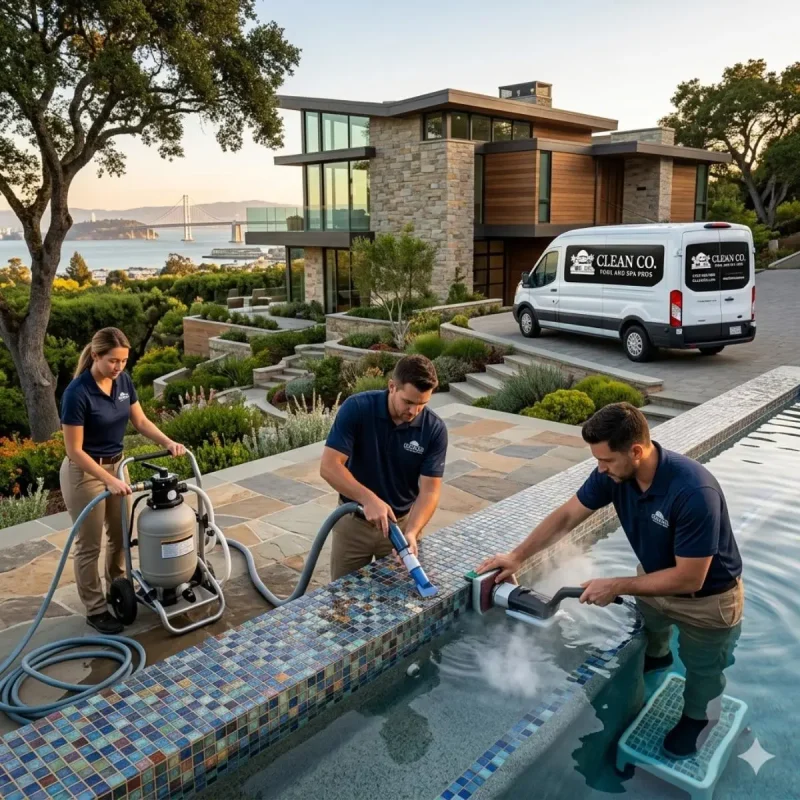
Crusty White Line on Your Tile? Get a Free Tile Cleaning Quote
We Are Experts With:




What Causes Calcium Buildup on Pool Tile
Pool water can only hold so much dissolved calcium. When it holds more than it can keep in solution, the extra drops out as calcium carbonate, better known as scale. High calcium hardness, high pH and high alkalinity all push the water in that direction, and the three together make it happen fast. Balanced water sits in a sweet spot where it neither drops calcium nor pulls it out of the plaster.
Calcium on pool tile shows up at the waterline first, because that’s where water evaporates. Every splash dries on the tile and leaves its minerals behind. Over a few months, those thin layers stack into a crust. Scale also grabs dirt as it forms, which is why an old line looks gray instead of white.
Heat speeds it up. Calcium is less soluble in warm water, so a heated pool or a spa spillover scales faster than a pool that stays cool.
Why Milpitas Pools Scale Faster in Summer
Hot, dry afternoons pull water out of a pool quickly, and every inch you top off brings in more minerals. The water leaves, but the calcium stays. By the end of a long summer, the water in many pools is far harder than what came out of the hose.
Where you live in town matters too. According to the city’s water quality report, Milpitas buys water from both Valley Water and the San Francisco Public Utilities Commission, and different parts of the city get different sources. The two don’t carry the same mineral load, so two pools a few miles apart can scale at very different rates.
Pools with waterfalls, spillovers or a raised spa wall scale faster as well, since water keeps splashing and drying on those surfaces all day.
The chlorine you use plays a part as well. Calcium hypochlorite, the powdered shock and tablets many people buy, adds calcium every time it goes in and nudges the pH up.
How to Clean Pool Tile Yourself
Light film and fresh spots usually come off with a tile brush and a cleaner made for pools. Household cleaners are a bad idea. Many contain phosphates, which feed algae and can make the waterline grime come back faster.
For thin scale on ceramic or porcelain tile, a pumice stone works if you keep it wet and use light pressure. Test it on a corner first. Never use pumice on glass tile or painted surfaces, and keep it off the plaster below the tile.
Skip anything that promises to melt scale in minutes. Strong acid poured along the waterline can etch the grout and the plaster just as easily as the scale. Once the crust is thick or hard, it’s a job for the right tools and the right cleaner, not more scrubbing.
Calcium Carbonate or Calcium Silicate?
Most waterline scale is calcium carbonate. It’s white or gray, a bit flaky, and it comes off with the right cleaner and some work. Leave it long enough, though, and some of it can turn into calcium silicate. That kind is harder, glassier and much slower to dissolve.
You can often tell them apart by feel. Carbonate scale crumbles or flakes when you work at it with a fingernail. Silicate scale feels like part of the tile and doesn’t budge. Silicate almost always needs a mechanical method to remove, which is one more reason not to let the line sit for years.
Glass and Specialty Tile Need Extra Care
Glass tile looks great until it gets scratched, and those scratches don’t buff out. Pumice, stiff brushes and harsh abrasives all leave marks on it. Some glazed tile and natural stone are almost as easy to damage.
That’s why the method matters more than the muscle. Heavy scale on durable tile can take a more aggressive approach, while the same approach on glass would ruin it. We check the tile first and pick a method that removes the scale without leaving marks behind.
How Heavy Scale Comes Off
Light scale usually lifts with a pool tile cleaner and a non-scratch pad, one section at a time. Thicker buildup takes more patience and sometimes a stronger cleaner applied carefully so it stays on the scale and off the grout.
For heavy, years-old crust on durable tile, the industry often uses media blasting, sometimes called bead blasting. A fine blasting media is sprayed at the tile under pressure, and it knocks the scale off without much chemical use. It works well, but it’s aggressive, so it isn’t the right choice for glass tile or soft glazes.
Whatever the method, the finished tile should look like new, with no haze or scratches left behind.
Other Marks on the Tile Line
Not every mark on the tile is calcium. A few others show up often:
- Scum line: a greasy ring from sunscreen, lotion and body oils that sits right at the water level
- Dark stains: leaves and other plant matter can leave brown or black tannin stains
- Blue-green stains: usually copper in the water
- Reddish-brown stains: usually iron
- Black spots in the grout: often black algae, which roots in and needs more than brushing
Each one has a different fix, so it pays to know which one you’re looking at before you start scrubbing.
Signs Your Pool Tile Needs Cleaning
- A white or gray band that brushing no longer removes
- Rough, crusty spots where people hold the edge
- A dark ring at the water level that comes back right after you wipe it
- Stains in the grout lines that weren’t there last season
- Tile that looks dull even when the water is clear
The sooner scale gets cleaned, the easier and cheaper it comes off.
Keeping Scale From Coming Back
Cleaning the tile fixes what’s there. Balanced water keeps it from returning. These are the ranges that keep scale in check on a plaster pool:
- Calcium hardness: 200 to 400 ppm
- pH: 7.4 to 7.6
- Total alkalinity: 80 to 100 ppm
Once calcium hardness climbs past about 500 ppm, you have very little room for error, and even a small rise in pH can start new scale. A sequestering agent helps hold calcium in the water so it doesn’t settle on the tile. Brushing the tile line every week does the rest. Test calcium hardness every month or two, and again after any big top-off in summer.
If your water keeps getting harder no matter what, partly draining and refilling with fresh water may be the only real fix.
Pool Tile Cleaning Cost in Milpitas
The price depends on how much tile your pool has, how thick the scale is and what kind of tile it is. A light waterline cleaning takes far less time than a crust that’s been building for years. We look at the pool first, then give you a price. Quotes are free.
A few things push the price up: glass or specialty tile that needs gentler methods, scale below the waterline, and spillways or raised spa walls with extra tile.
Tile cleaning also costs less the sooner it happens. Scale hardens and thickens every season, so a line that would come off easily this spring can take much longer next year.
When Tile Needs More Than Cleaning
Cleaning can’t fix tile that’s cracked, loose or missing grout. Those spots need a tile repair, and water can get behind the tile if they’re left too long. Stains on the plaster itself, below the tile line, are a different problem too. Grout that has worn away also lets scale and algae take hold faster, so it’s worth fixing before the next cleaning. Plaster stains often call for an acid wash instead.
Booking Tile Cleaning in Milpitas
For a tile cleaning quote, phone (408) 317-7550 or use the scheduling form near the top. We’re based in Milpitas and also clean tile across the cities listed below, from Fremont to Sunnyvale. If you’d like the tile line brushed every week along with the rest of the pool, that’s part of our weekly pool service. You’ll find filter and spa cleaning on the main pool cleaning page.
Pool Tile Cleaning Questions We Hear in Milpitas
Straight answers about calcium, scale and tile care. Still unsure? Call (408) 317-7550.
It depends on how much tile your pool has, how thick the scale is and the type of tile. We look at the pool first and quote the job for free.
Calcium scale. Water evaporates at the waterline and leaves its minerals behind, and high calcium, pH or alkalinity make it build faster. Dirt in the scale turns it gray over time.
Vinegar is a mild acid, so it can loosen light, fresh scale on ceramic tile. It won't do much against thick, hardened buildup, and it doesn't fix the water balance behind it.
On ceramic and porcelain tile, yes, if you keep it wet and press lightly. Never use it on glass tile, painted surfaces or the plaster below the tile line.
Usually not. Waterline tile can be cleaned with the pool full. Scale that sits a few inches below the surface sometimes means lowering the water level a little.
Brush the tile line every week. A deeper cleaning is needed whenever scale starts to form, which depends on your water and how well it stays balanced.
For a plaster pool, 200 to 400 ppm. Above about 500 ppm, scale forms easily, especially if the pH or alkalinity runs high.
It can. Scale leaves a rough surface that can scrape skin, especially on steps, benches and the tile line where people hold on.
Keep calcium, pH and alkalinity in range, brush the tile line weekly and use a sequestering agent if your water is hard. Watch how much calcium-based chlorine you add.
Weekly service includes brushing the tile line. Removing hardened scale is a separate job, priced once we have seen the tile. See our weekly pool service page for what each visit covers.