
Spa Cleaning in Milpitas, CA
Weekly hot tub care and full drain-and-refill cleanings for standalone spas and spas built into a pool.

Schedule Service!
Hot Tub Cleaning Service for Standalone and Pool Spas
A spa holds a few hundred gallons of hot water shared by several people, so it gets dirty much faster than a pool. Our spa cleaning service in Milpitas keeps the sanitizer up, the filter clean and the water fresh, for a standalone hot tub or a spa built into your pool.
What Weekly Spa Service Includes
- Water testing and balancing, with our chemicals
- Skimming and brushing
- Vacuuming as needed
- Skimmer and pump baskets emptied
- An equipment inspection
- Filter cleaning when the pressure calls for it
Drain, Clean and Refill
Even well-kept spa water wears out. When it does, we drain the spa, clean the surfaces, take off the calcium at the waterline, rinse the filter and look over the jets. Then we refill it and balance the fresh water.
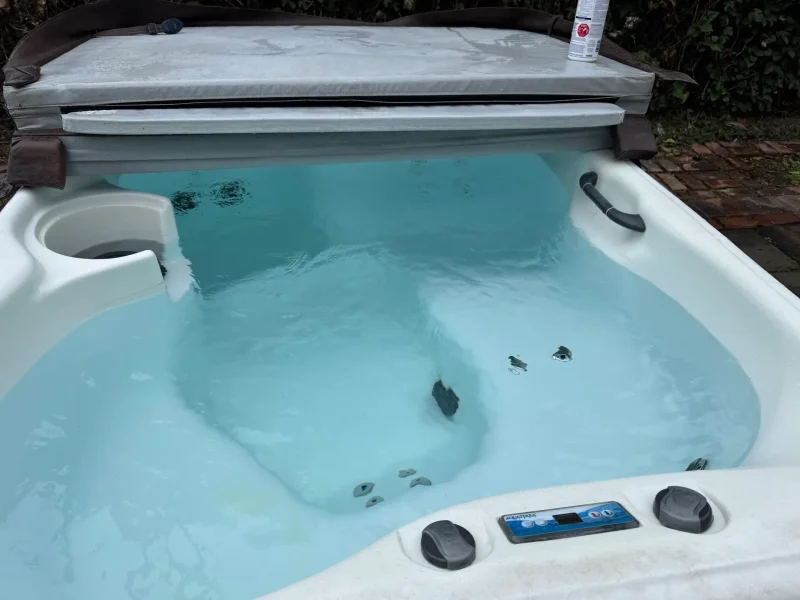
Hot Tub Water Looking Tired? Book a Spa Cleaning With Clean Co Pools
We Are Experts With:




How Often to Drain and Clean a Hot Tub
That comes down to two numbers: how big the spa is and how many people use it. A good rule is to take the spa’s gallons, divide by 3, then divide by the number of people who soak in it on a typical day. The answer is roughly how many days the water lasts.
Take a 450-gallon hot tub used by two people a day. That works out to about 75 days, so a little over every two months. If you only soak a few nights a week, you can stretch it out. Host a crowd every weekend, and the spa needs fresh water sooner. Most home spas around Milpitas land somewhere between two and four months.
The water also tells you when it’s done. Foam that keeps coming back, a haze that won’t clear and sanitizer that disappears overnight all point to water that’s full of dissolved solids. At that point, more chemicals just chase the problem. A drain and refill fixes it.
Why Hot Tub Water Goes Bad Faster Than Pool Water
Heat is the main reason. Chlorine and bromine break down faster in hot water, and warm water is where bacteria grow best. The jets and air blower make it worse. Bubbling drives carbon dioxide out of the water, which pushes the pH up and slowly uses up the alkalinity.
Then there’s the math. A pool gives each swimmer something like 1,800 gallons of water. A spa gives each person about 200. Six people in a 1,200-gallon spa put the same load on the water as 275 people in a 55,000-gallon pool.
Hot water also evaporates quickly, and the minerals stay behind. Each top-off adds more, so calcium and dissolved solids keep climbing until the only fix is fresh water.
An outdoor spa has one more problem. It’s shallow, so sunlight reaches more of the water and burns off more sanitizer than it would in a pool.
Spa Water Numbers to Aim For
Spa ranges differ from pool ranges, mostly because the sanitizer has to work harder:
- Free chlorine: 3 to 5 ppm, or total bromine at 4 to 6 ppm
- pH: 7.4 to 7.6, and never below 7.2 or above 7.8
- Total alkalinity: about 80 to 100 ppm
- Calcium hardness: 150 to 250 ppm
- Water temperature: no higher than 104°F
A spa is small, so a little extra chemical goes a long way. Add doses in small steps and retest. When the pH needs to come down, dry acid is gentler on a small body of water than muriatic acid. And since calcium falls out of hot water more easily, a scale inhibitor helps protect the heater.
Cloudy or Foamy Hot Tub Water
Cloudy hot tub water usually comes from one of four things: low sanitizer, a dirty filter, high pH or calcium, or water that’s simply too old. Test first. If the chemistry reads fine and the filter is clean, the water is probably spent. A test for total dissolved solids settles it. Once that number climbs about 1,500 ppm above what the fresh water started at, drain the spa.
Foam works the same way. It shows up when lotions, soaps and body oils build up faster than the sanitizer can burn them off. A defoamer knocks the bubbles down, but it only hides the problem. If the foam keeps coming back, the spa needs a drain, a cleaning and a refill.
Green water means algae, and that only happens when the sanitizer has been low for a while. A spa that turns green needs a shock, a filter cleaning and usually fresh water.
Spa Filter Cleaning
Most spas use cartridge filters, and they load up fast because hot tub water carries so much body oil. Sand filters are rare on spas for that same reason. Oils and scale can coat the sand until it barely filters at all.
Clean the cartridge once the pressure is up 8 to 10 psi from where it started clean, and don’t let it go more than about six months between cleanings. Rinsing with a garden hose takes off loose dirt. Soaking it in a degreaser takes off the oils a rinse leaves behind. Check the pleats for tears while the cartridge is out.
Keeping a spare cartridge means the spa never runs without one. For more on filters, see our pool filter cleaning page.
Hot Tub Rash and Other Health Risks
Hot tub rash is an itchy, bumpy rash, often worst under a swimsuit. It comes from a germ called Pseudomonas, which does well in warm water that’s short on sanitizer. The CDC’s hot tub rash guide recommends at least 3 ppm of chlorine to keep it away.
Bacteria can also shelter in a slimy film called biofilm, inside the plumbing and at the waterline. It takes far more sanitizer to reach bacteria in biofilm than bacteria floating in the water. That’s why steady sanitizer levels and regular brushing matter more in a spa than in a pool.
Legionella is rarer but more serious. It spreads through the fine mist the jets throw into the air, which is one more reason to keep the sanitizer in range every day.
Heat is a risk of its own. Keep the water at 104°F or below. Pregnant women and young children should check with a doctor before using a hot tub.
What Happens on a Drain and Refill
A full spa cleaning goes in this order:
- Power off at the breaker, so the heater and pump can’t run dry.
- Drain the spa.
- Clean the shell and the waterline, where oils form a scum line.
- Remove calcium and scale.
- Clean the filter.
- Check the jets.
- Refill, restore power and balance the fresh water.
Stick to cleaners made for pools and spas. Household cleaners can leave phosphates behind, and those can make the scum line come back faster. Plan on the spa being out of use for most of the day, since fresh water takes hours to heat back up.
Cleaning the Spa Shell and Waterline
The waterline is where a spa shows its age first. Body oils and lotions collect in a greasy ring called a scum line, and once it starts, it pulls more grime out of the water and grows. Bacteria can hide inside it, too.
Brushing the waterline often keeps the ring from forming. Where the water is hard, scale builds up in the same spot and turns into a crusty white line that brushing won’t lift. That’s the calcium we take off during a drain and refill. A scale inhibitor and steady water balance slow it down in between.
Go easy on the shell itself. Acrylic scratches, so use a soft cloth or sponge, never a scouring pad or a stiff brush.
Keeping the Water Clean Between Visits
- Shower before you get in. Soap and water take off the lotion, sweat and oils that would otherwise end up in the spa.
- Keep the cover on when nobody’s using it. It keeps out leaves and slows evaporation.
- Test the water a couple of times a week, and more often after a party.
- Rinse your swimsuit after a soak instead of letting it sit wet.
- Call us if the water turns cloudy or foamy before it’s due for a refill.
Spa Cleaning Cost in Milpitas
Our hot tub cleaning service is priced by the size of your spa and the shape it’s in. A start-up cost may apply to get the water and equipment ready for weekly service. The equipment also needs to be sized right and in good working order before we take it on. Quotes are free, and we give you the number after we see the spa.
If something’s broken rather than dirty, like a heater that stays cold or a jet that won’t run, our spa repair team handles that.
Booking Hot Tub Service in Milpitas
To set up hot tub cleaning, send us the form near the top or call (408) 317-7550. Milpitas is our home base, and we also clean spas across the service area below, from Fremont and Newark to San Jose and Sunnyvale. If your spa is part of a pool, our weekly pool service page covers the pool side, and our pool cleaning page covers everything else we clean.
Spa and Hot Tub Cleaning Questions From Milpitas Owners
Quick answers about keeping a hot tub clean. Have a different question? Call (408) 317-7550.
It depends on the spa's size and condition, and a start-up cost may apply for weekly service. We quote for free after seeing the spa and its equipment.
Divide the spa's gallons by 3, then by the number of daily users. That's roughly how many days the water lasts. Most home spas need fresh water every two to four months.
Once the pressure rises 8 to 10 psi from its clean starting point, and at least every six months. A quick hose rinse between cleanings helps, since spa filters collect a lot of body oil.
Usually low sanitizer, a dirty filter, high pH or calcium, or old water. Test the water and clean the filter first. If it stays cloudy, the water likely needs replacing.
Lotions, soaps and body oils build up faster than the sanitizer can break them down. Defoamer hides it for a while. Foam that keeps coming back means it's time to drain and refill.
Free chlorine should stay between 3 and 5 ppm. If you use bromine, keep total bromine at 4 to 6 ppm. Spas need more sanitizer than pools because hot water burns it off faster.
Both work if you keep them in range. Bromine holds up better at the higher pH common in spas, and its byproducts irritate eyes less, which is why many spa owners pick it.
A germ called Pseudomonas that grows in warm water with too little sanitizer. Keep chlorine at 3 ppm or more, shower after a soak, and wash your swimsuit.
No hotter than 104°F. Most spas run somewhere between 98°F and 104°F. Pregnant women and young children should ask a doctor before using a hot tub.
Cleaning handles water, filters and surfaces. A cold heater, a humming pump or a leak needs a repair. Our spa repair page covers those.